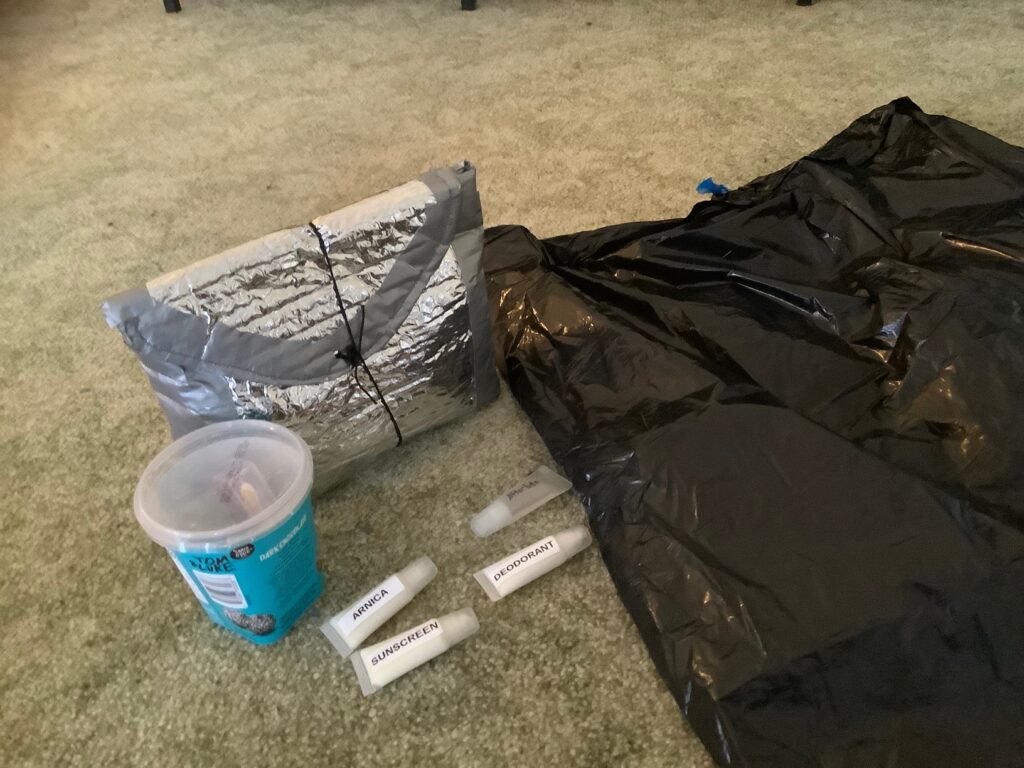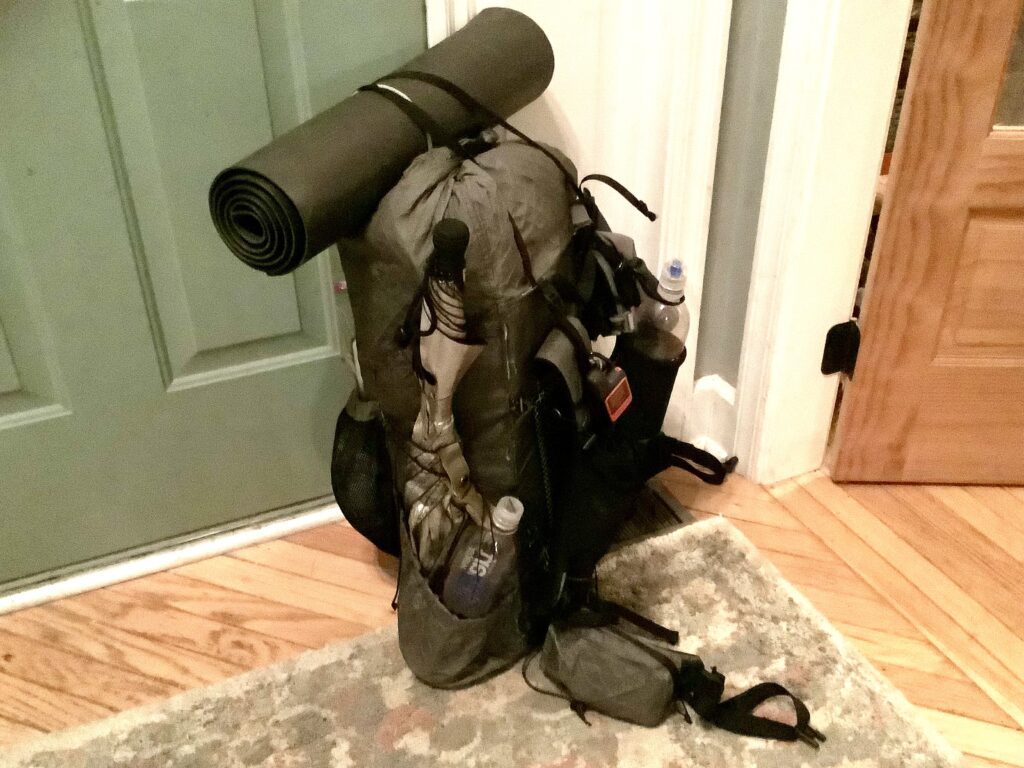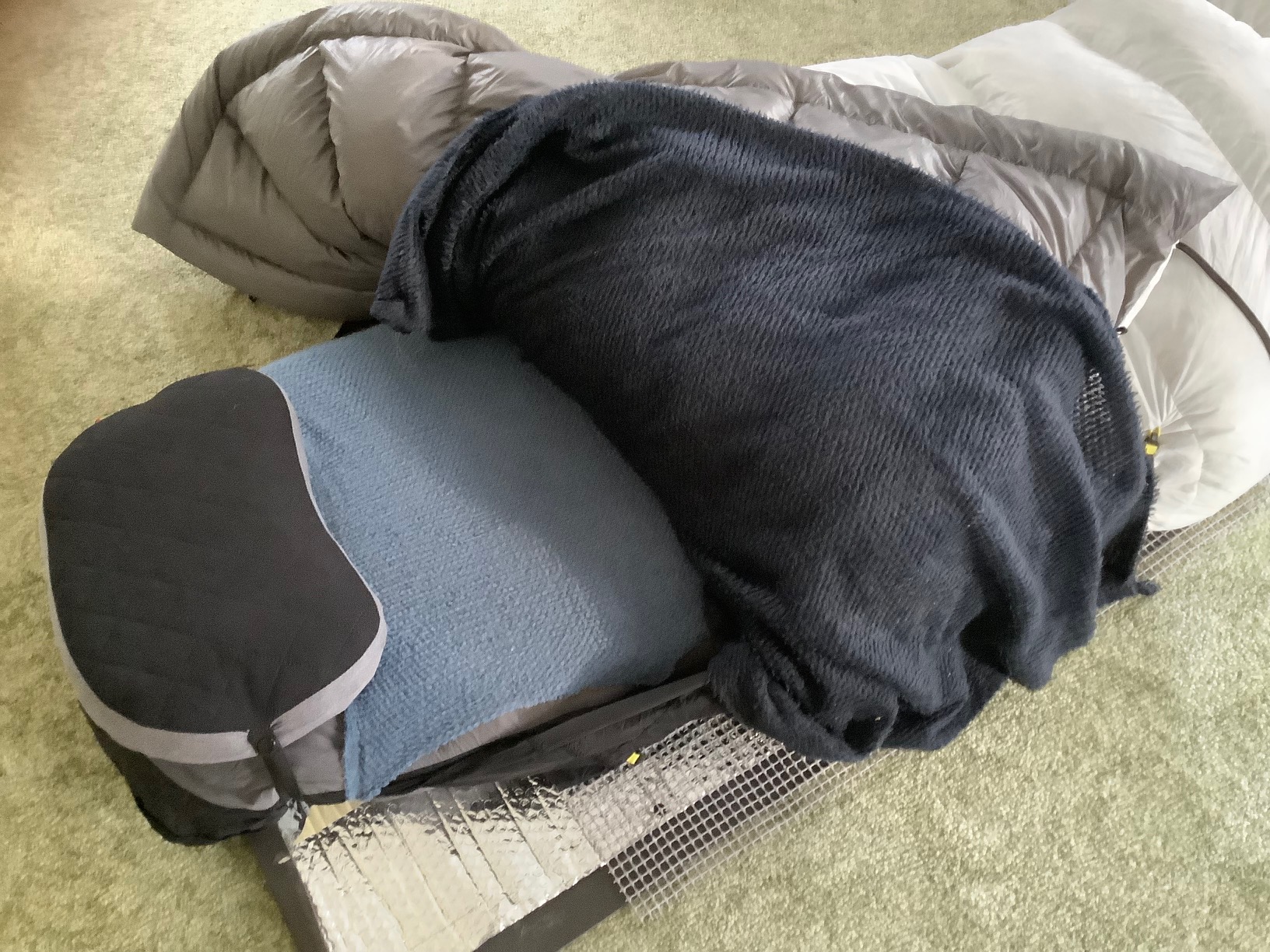
Day one on the trail is fast approaching and I thought that some of you might be interested in the things I have done to make or customize my gear to hopefully better suit my needs on my thru-hike. Some of these have been tested on my training hikes and some will get their first use on the AT. Will they all work as I imagine? Only time will tell.
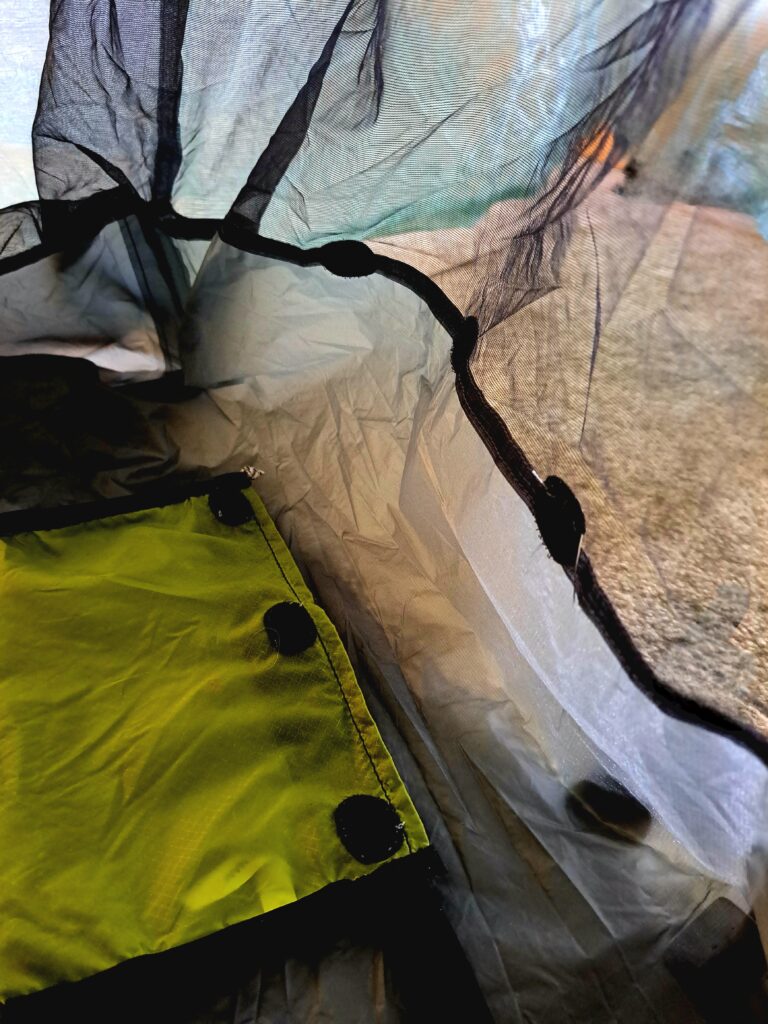
Tent modifications:
My tent is the Durston X-Mid Pro 2. It is the first iteration and therefore has no storage pockets on the inside. This is a problem because I wear glasses and somehow they always end up under my sleeping pad by morning. I really do not want broken glasses. I initially thought that I would just sew pockets inside, but I already carry a couple of small bags to store items like my first aid and hygiene items. These could easily double as pockets in my tent at night. So, I simply sewed a strip of Velcro loops on the back of the bags and then sewed the hook strips to the inner wall of my tent. Now I have pockets and very little added weight in my pack. I also added a loop to each of the pockets where the trekking pole supports go into the tent. I plan to use the loops to tie my lantern and other items I want to hang up inside.
Backpack:
I carry a Durston Kakwa pack which I love. I added a clip to hold my umbrella, clips that attach my water bottles to my pack, loops of bungee cord to attach my trekking poles when I am not using them, and a lumbar pad mainly because the hip belt can be a little loose on me even at the smallest size. I carry extra clips because I tend to lose anything on the outside of my pack that is not attached. I lost my prescription sunglasses in Pictured Rocks National Park and even managed to lose my Helinox chair somewhere in the mountains of Vermont!
Sleep System:
This is where I have made most of my changes. one reason is because I hate the plastic feeling of outdoor gear against my skin, the other reason is that I have a very light but low insulation (R-value) sleeping pad and I don’t want to buy a second winter one unless it is absolutely necessary. Instead, I created what I hope is a good modular system and I can send home the extra pieces as the weather gets warmer. I have a 1/8-inch-thick foam pad to which I glued a layer of Reflectix insulation. I also have a second torso-length piece of the Reflectix with snaps so I can take off if not needed. I also made a sheet and blanket from Alpha Direct Fleece which goes onto my inflatable sleeping pad, and the final layer is my 10-degree down quilt. I had originally planned to just take a closed-cell foam pad in addition to the inflatable one, but all my additions result in a lower total weight and it feels warmer to me. My biggest concern is whether the Reflectix material will hold up over time.
Small Items
I made an insulated bag out of Reflectix as well. I use it to keep my dehydrated meals warm while they cook and store my electronics so they don’t lose power from the cold temperatures. At night I even put a hand warmer in with them if it is going to get really cold. I transferred all my soap, lotion, and toothpaste into small squeeze tubes for easier storage. Probably my craziest project is a trash bag I turned into a rain skirt (and an identical rain “kilt” for my husband). Traditional rain gear is not at all breathable and I get as wet from sweat as I would from just letting the rain pour on me, so I really hope this works.
The true test of my projects will be the weeks and months I spend outdoors in the weather.
I am sure there will be a few additions as I refine my gear. You will just have to check in with my blog if you want to learn what worked and what failed! Feel free to message me if you want details on any of these projects so you can make your own.